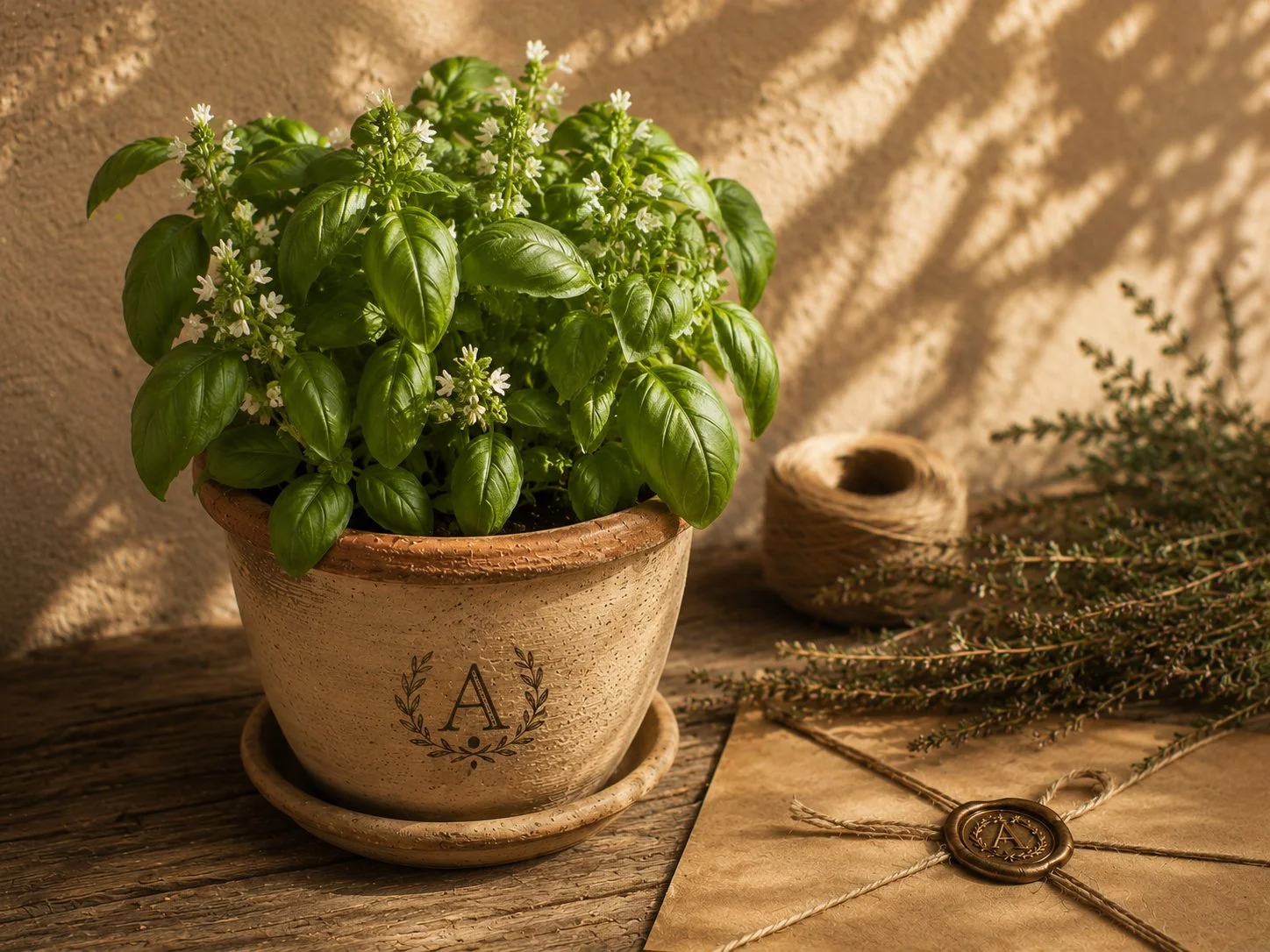
Basil is a summer plant. It comes from tropical Asia and the Mediterranean and it has never forgotten that. It wants warmth, sun, and shelter, and if you give it those things it will reward you generously. Deny it any of them and it will tell you immediately by drooping, blackening at the edges, or simply giving up. It is not a forgiving plant, but it is not a difficult one either. It just needs to be understood.
Basil is everywhere in summer: supermarkets, garden centres, farmers markets. The supermarket pots are grown fast under artificial light and tend to be overcrowded and weak. They can be rescued: split the pot into two or three smaller clumps, repot each into fresh compost, water well, and give them a warm bright spot. They will recover.
It needs heat and sun above everything. A south-facing windowsill is ideal. It will not survive outdoors in a cold climate until the nights are reliably warm, usually June onwards. It cannot tolerate cold draughts, cold water on its leaves, or cold soil. Water at the base, not from above, and use room temperature water if you can. It grows quickly in good conditions and will need pinching back regularly to stop it bolting to flower, which ends its useful life.
Basil is an annual. It completes its life cycle in one season and will not come back. Grow new plants each year from seed from April onwards, or buy fresh plants in late spring.
Do not refrigerate fresh basil. Cold damages the leaves and turns them black. Keep it at room temperature, stems in a small glass of water, loosely covered. It will last four to five days this way.
To preserve it, the best method is to blend the leaves with a little olive oil and freeze in an ice cube tray. Each cube is ready to go directly into a sauce, soup, or dressing. Drying does not suit basil well. It loses most of its flavour. Oil is the better medium for preservation.
Basil's flavour is bright, slightly sweet, faintly peppery, with a warmth underneath. It is at its best raw or added at the very end of cooking. Heat diminishes it quickly. Tear the leaves rather than cutting them where you can, which bruises rather than shreds.
It belongs with tomatoes in a way that feels fundamental. A simple salad of tomatoes, torn basil, and good olive oil needs nothing else. It is the foundation of pesto, with pine nuts, garlic, parmesan, and oil. It goes into pasta sauces added at the last moment. Into pizza. Into dressings. Into anything where you want freshness and warmth at once.
Thai basil, which has a slightly more anise-like flavour, is a different variety suited to southeast Asian cooking: stir fries, curries, noodle dishes.
Basil has been used medicinally across cultures for centuries. It contains compounds with anti-inflammatory and antibacterial properties. An infusion of basil leaves has been used for digestive complaints, headaches, and as a mild calming remedy. Basil oil is used in aromatherapy for stress and mental fatigue.
In the folk traditions of southern Europe and Asia, basil has long been associated with protection and love. In Italy it was placed on windowsills to ward off evil and given between lovers as a token. In India the holy basil, tulsi, is considered sacred, a protector of the household, and is grown in temples and homes alike. It is one of the few plants that appears as sacred across multiple unconnected traditions. Something in it has always been recognised as more than culinary.