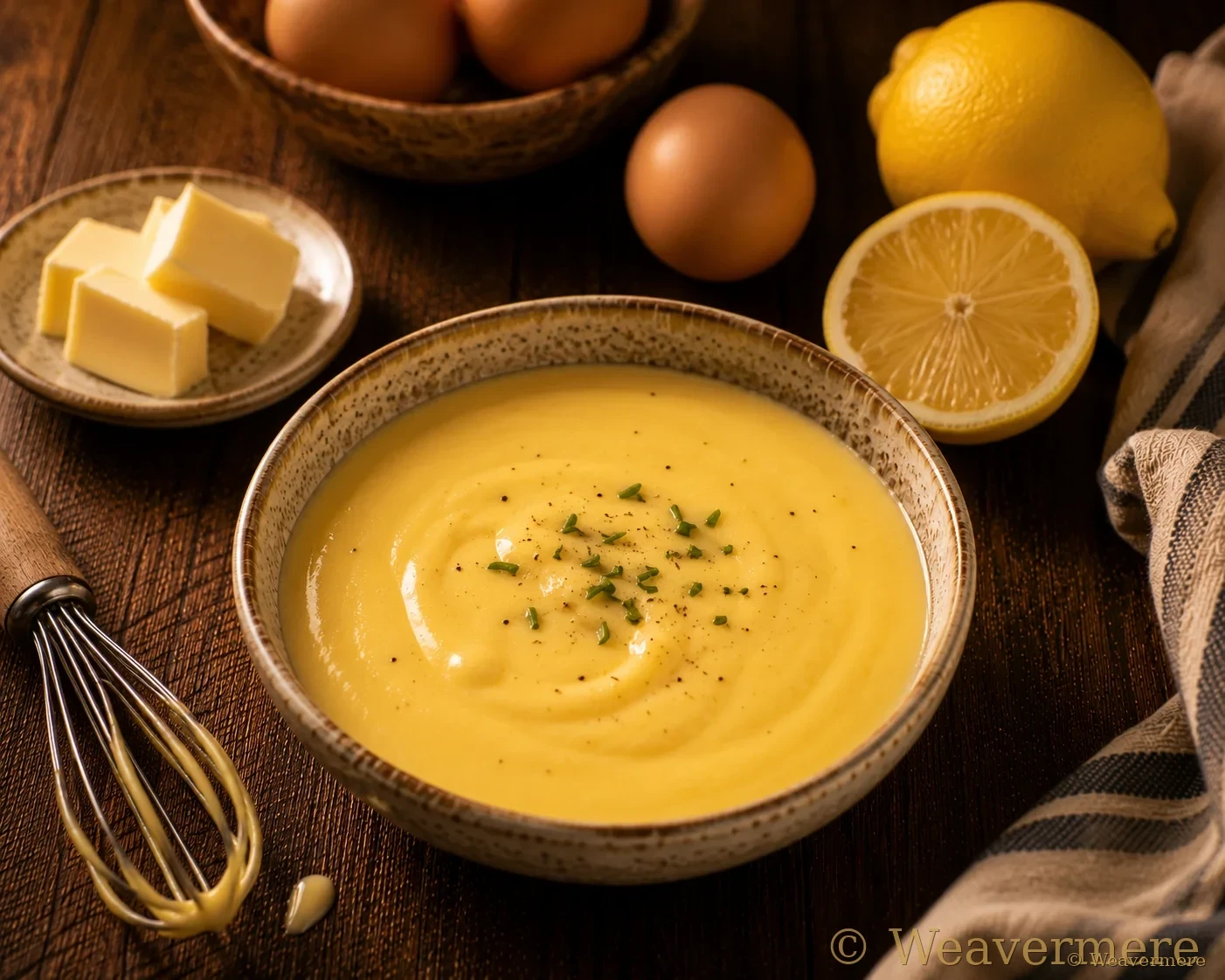
Hollandaise has a reputation it does not entirely deserve. People are afraid of it. They should not be. It can split, yes, and when it does it looks alarming. But it can almost always be saved, and once you understand what it is and what you are doing, it stops being frightening.
It is an emulsion. Egg yolks and butter, held together by patience and heat. That is all it is.
What you need
For four people:
- 3 egg yolks
- 200g unsalted butter
- 1 tablespoon white wine vinegar or lemon juice
- Salt, white pepper, a little cayenne if you like
How to make it
Melt the butter gently and keep it warm. You want it liquid but not hot.
Put the egg yolks in a small heavy saucepan with the vinegar or lemon juice and a tablespoon of cold water. Set it over the lowest heat you have. Whisk continuously from the start — do not stop, do not walk away. The yolks will slowly thicken and become pale. Keep whisking. When the mixture falls in a thick ribbon from the whisk and holds its shape briefly, it is ready.
Now add the butter very slowly — a few drops at a time to begin, whisking constantly. As the sauce takes hold you can add the butter in a thin steady stream, still whisking. Season with salt, white pepper, and a little cayenne.
The heat is everything. Too high and the eggs scramble. Too low and nothing happens. Low and patient is the way.
If it splits
Take a clean pan. Put a fresh egg yolk in it with a teaspoon of cold water. Whisk briefly over low heat until it just starts to thicken. Then add the split sauce to this new yolk very slowly, whisking constantly. It will almost always come back.
What you can do with it
The classic use is eggs Benedict — poached eggs on toasted muffins with ham or smoked salmon, hollandaise over the top. It goes over asparagus in a way that is one of the better combinations in cooking. Over grilled fish. Over steamed vegetables. It makes a simple plate into something worth sitting down for.
It does not keep. Make it when you need it and serve it within an hour.