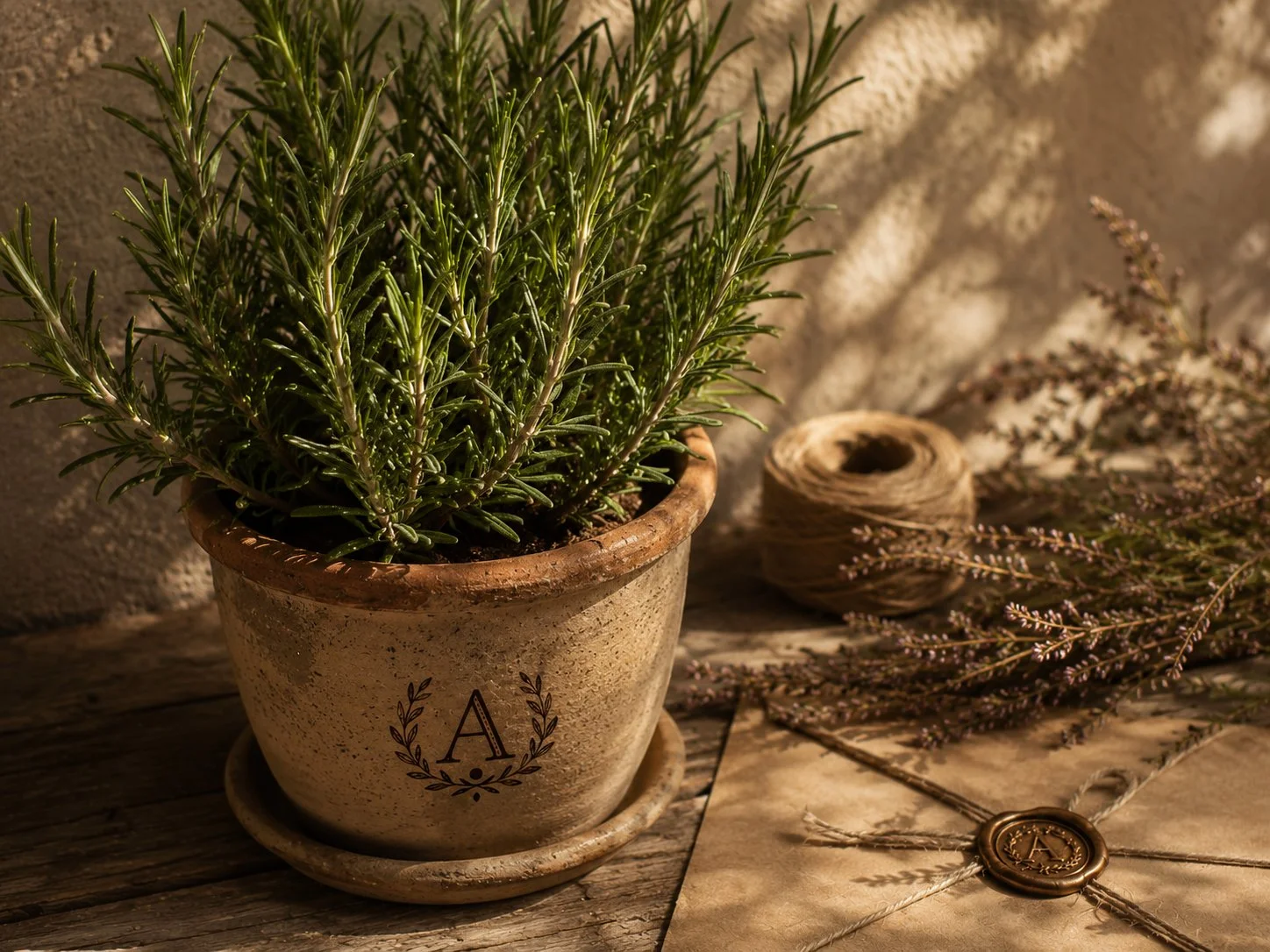
Rosemary is one of the oldest cultivated plants in the world. It has been growing in gardens around the Mediterranean for thousands of years, and in northern European gardens for almost as long. It arrived in Britain with the Romans. It has never really left. It is an evergreen shrub that knows what it is regardless of where it finds itself, in a grand garden or a pot on a kitchen windowsill, it carries the same character.
Rosemary is widely available. You will find it in most supermarkets as a fresh cut herb, and as a living plant in garden centres from early spring through to autumn. Buy the living plant if you can: it will give you years of use for the price of one bunch.
It wants sun and drainage above everything else. A south-facing spot, whether outside or on a windowsill, suits it well. It will tolerate poor soil and dry conditions far better than it tolerates wet roots. If growing in a pot, use a gritty compost and make sure the pot drains freely. Water sparingly: when the soil is dry, not before. It does not need feeding. It does not need much attention once established. It is perennial, which means the same plant will return year after year, and in good conditions will grow into a substantial shrub over time.
Fresh rosemary keeps well in the fridge, wrapped loosely in a damp cloth or standing upright in a small glass of water, for up to two weeks. To dry it, cut long stems and hang them upside down in a warm, airy place out of direct sunlight for two to three weeks. Dried rosemary keeps its flavour for up to a year in a sealed jar. You can also freeze it: strip the leaves from the stems, spread on a tray to freeze, then transfer to a bag. Use straight from the freezer without defrosting.
The flavour is strong, resinous, piney. A little goes a long way. It belongs with lamb in a way that feels almost necessary: pressed into slits in the meat before roasting, or laid under it in the pan. With roasted root vegetables and potatoes. In focaccia and other breads. With chicken. In marinades. Strip the leaves from the woody stem and use them whole for longer cooking, or chopped finely when you want the flavour without the texture. The woody stems themselves can be used as skewers for grilling fish or vegetables over a flame.
Rosemary has been associated with memory for as long as anything has been written down. It was carried at funerals and at weddings, tucked into the hands of the dead, woven into bridal wreaths. There is evidence behind the tradition: compounds in rosemary have been shown to support acetylcholine activity in the brain, which is involved in memory and concentration. The old knowledge was not wrong. It rarely is.
As a medicine it has been used for centuries to improve circulation, ease headaches, and support digestion. Rosemary oil, diluted in a carrier oil, is used for scalp and hair health. An infusion of the leaves makes a rinse that has been used for that purpose for generations.
In the folk tradition it is a protective plant. Hung at a threshold, laid across a doorstep, tucked under a pillow against bad dreams. In the domestic magic of the households that kept it, rosemary at the door meant the house was guarded. It still carries that weight. It still smells like something that has been here a long time and intends to stay.