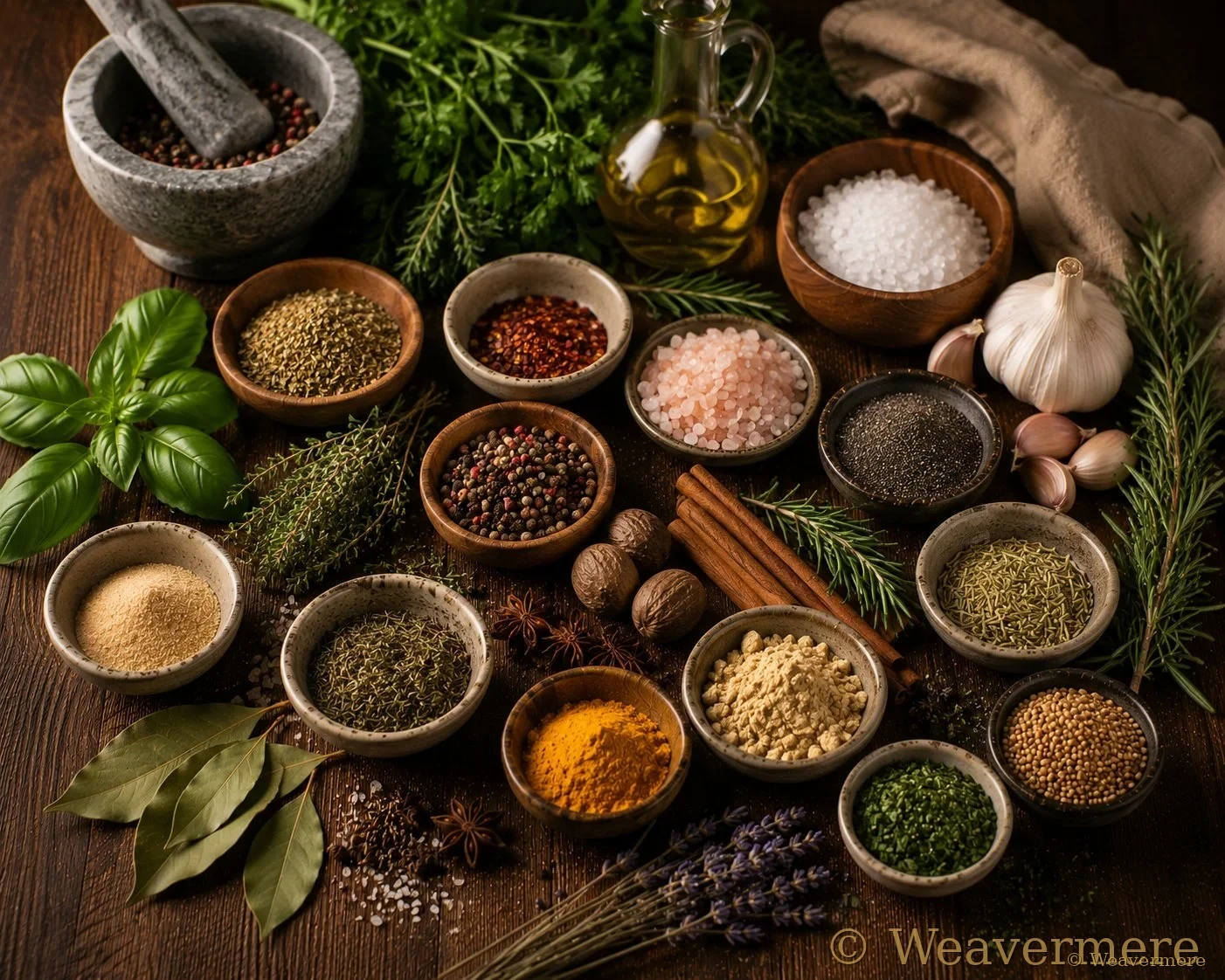
Seasoning is not a step at the end. It is something that happens throughout cooking, and understanding it changes everything about how food tastes.
Most people under-season. Not because they are careless but because they have been told salt is bad, or because they are afraid of getting it wrong, or because they were never shown what properly seasoned food actually tastes like. The result is food that is technically correct but flat. It has all its components but none of its voice.
Adjust to what your body needs, but understand what these elements do before you decide how much of them to use.
The four elements
Salt, acid, fat, and heat.
They are the four things that shape almost every dish. Getting them right is what separates food that is good from food that is extraordinary.
Salt
Salt does not make food taste salty. Used correctly, it makes food taste more like itself. It draws out flavour, suppresses bitterness, and enhances everything else in the dish. The question is not whether to add it but when and how much.
Season in layers — at the beginning when you are cooking onions or building a base, in the middle as things develop, and at the end to adjust. Tasting as you go is the only way to know. Use a good sea salt or kosher salt rather than table salt, which has a sharper, more chemical flavour.
Acid
A squeeze of lemon or a splash of vinegar at the end of cooking does something that nothing else can — it brightens everything, lifts the whole dish, makes it taste more alive. If something tastes dull and flat and you cannot work out why, it usually needs acid rather than more salt.
Lemon juice, wine vinegar, sherry vinegar, a splash of white wine. Any of these added in small amounts at the end can transform a dish. Add it carefully, taste, add a little more if needed.
Fat
Fat carries flavour and gives food richness and roundness. A knob of butter stirred into a sauce at the end. A drizzle of good olive oil over a finished dish. These are not indulgences, they are finishing techniques that change the texture and depth of what you have made.
Heat
This is about adding the right temperature at the right time. High heat for searing and browning, which creates flavour through caramelisation, and low heat for cooking through gently without toughening or drying. If you cook at too low a heat for the first part of cooking and too high for the second, your dish will not come out right.
How to use this
Taste everything, at every stage. Not just at the end. A dish that has been tasted and adjusted throughout will always be better than one that has been seasoned once at the end. Season, taste, adjust. That is the whole practice.